2026 Best Exhaust Powder Coating Types for Global Buyers?

Time:2026-09-08 Author:Madeline
0%

The 2026 exhaust market is demanding coatings that withstand heat, corrosion, vibration, and changing environmental rules. Exhaust Powder Coating is no longer judged by appearance alone. Buyers now examine resin chemistry, curing temperature, film thickness, salt-spray performance, and traceable quality records.

Grand View Research valued the global powder coatings market at approximately USD 15.7 billion in 2023. Its report projects continued growth through 2030, supported by automotive, industrial, and infrastructure applications. MarketsandMarkets also identifies transportation and metal protection as important demand areas. However, these reports rarely separate exhaust-specific powder coatings. Comparisons are not perfectly equal.

Roger Talbert, author of Powder Coating: The Complete Finisher’s Handbook, emphasizes a useful principle: “Powder coating is a process, not a product.” That warning matters for global buyers. A silicone-based high-temperature powder may survive an exhaust shell, while a conventional polyester system may discolor or fail near the manifold. Surface preparation remains critical. Oil, scale, weld residue, and trapped moisture can undermine even premium material.

Look beyond the color chart.

A reliable 2026 specification should state the maximum continuous temperature, peak-temperature tolerance, substrate requirements, curing schedule, coating thickness, adhesion rating, and corrosion-test method. ASTM D3359 adhesion testing and ASTM B117 salt-spray data can support comparison, but laboratory results do not perfectly reproduce road salt, thermal cycling, and engine vibration.

This guide evaluates the best Exhaust Powder Coating types for global buyers. It also questions common claims, because “high temperature” can mean very different things across suppliers. The strongest choice is not always the cheapest or glossiest. It is the system supported by transparent testing, consistent production, and realistic installation conditions.
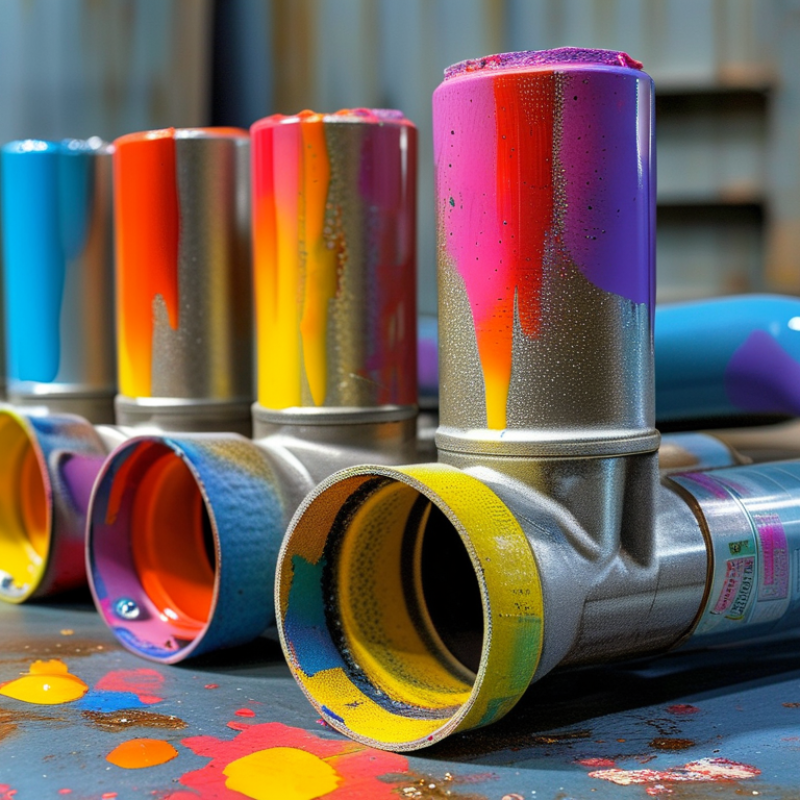
2026 Best Exhaust Powder Coating Types for Global Buyers?

What Is Exhaust Powder Coating and Why Does It Matter?

What Is Exhaust Powder Coating and Why Does It Matter?

Exhaust powder coating is a dry finishing process for pipes, mufflers, heat shields, and related metal parts. The powder is electrostatically applied, then cured in an oven. Unlike conventional liquid paint, it usually contains very little solvent. The U.S. Environmental Protection Agency identifies powder coating as a low-VOC finishing method, although actual emissions depend on pretreatment and curing conditions.

Temperature is the real test. Standard polyester powder may work on cooler exhaust shields, but it is unsuitable for many manifolds. Silicone-based high-temperature powder coatings are more appropriate for mufflers and pipes exposed to sustained heat. Ceramic-filled formulas can improve thermal resistance, surface hardness, and corrosion protection. However, no coating fits every exhaust location. Surface temperature, steel grade, salt exposure, and thermal cycling must be checked first.

According to Grand View Research, the global powder coatings market was valued at approximately USD 13 billion in 2023, with continued growth expected through 2030. This expansion reflects demand for durable, lower-solvent finishes across industrial applications. Yet market growth does not guarantee exhaust performance. Tests should include adhesion, salt spray, repeated heating, and cooling. The American Society for Testing and Materials provides relevant methods for these evaluations. In practical inspections, small defects around welds often become larger failures. That detail is easy to miss. A coating that looks excellent after curing may still crack after several heat cycles. Global buyers should request test temperature, coating thickness, cure conditions, and substrate preparation records before comparing prices.

How to Compare Powder Coating Types for Exhaust Systems

Choosing an exhaust powder coating starts with heat exposure, not color. Measure the pipe, muffler, and nearby brackets separately. Their temperatures can differ sharply after a long highway climb. Standard epoxy or polyester powders often soften, discolor, or lose adhesion under exhaust heat.

Silicone-based high-temperature powders suit many external exhaust surfaces. Ceramic-filled formulas may improve heat resistance and surface hardness. Compare continuous and peak temperature ratings carefully. A rating of 650°C does not guarantee unlimited service at 650°C. Check thermal cycling data, salt-spray results, impact resistance, and curing requirements. Film thickness matters too. Excessive thickness can crack when the metal expands and contracts.

Surface preparation remains decisive. Remove oil, mill scale, and corrosion before blasting or approved chemical treatment. Apply the coating within the specified preparation window. In production inspections, I would check edges, welds, bolt holes, and drain points first. These areas often fail earlier than flat panels. The wrong choice is easy.

Ask the supplier for test panels using your actual steel grade and curing oven. Include repeated heating and cooling, not only a single oven test. I have seen attractive finishes fail because the test ignored vibration and road moisture. There is no universal best powder. Cost, color stability, repairability, and expected temperature must be weighed together. Datasheets help, but field evidence should decide.

Which Coatings Suit Different Exhaust Components and Materials?

2026 Best Exhaust Powder Coating Types for Global Buyers?

Coating choice must follow the exhaust component, not the color chart. Mild-steel mufflers and tailpipes usually need a corrosion-resistant primer and a silicone-modified powder topcoat. Epoxy primers improve adhesion and barrier protection, but epoxy alone can degrade under sunlight and repeated heat. Polyester powders suit visible exterior sections better, especially where temperatures remain moderate. High-temperature ceramic systems may be more appropriate near manifolds, where conventional powder coatings can fail quickly.

Aluminum heat shields require careful pretreatment because oxide layers reduce adhesion. Thin panels also need controlled curing to prevent distortion. Stainless-steel components need abrasion or chemical pretreatment, despite their natural corrosion resistance. Clean surfaces matter more than a thicker coating. They often decide the result.

The AMPP IMPACT study estimated global corrosion costs at about 3.4% of global GDP, or roughly 2.5 trillion dollars. That figure supports serious surface preparation, not decorative overcoating. A 2024 market assessment by Grand View Research valued the global powder coatings market at approximately 15 billion dollars in 2023. Growth is strong, but marketing can simplify heat limits. Real exhaust temperatures vary sharply with engine load, airflow, and component position. I would test a coated sample through thermal cycling, adhesion testing under ASTM D3359, and corrosion exposure based on ASTM B117. One weakness remains: laboratory salt spray results rarely reproduce every road condition.

2026 Best Exhaust Powder Coating Types for Global Buyers — Which Coatings Suit Different Exhaust Components and Materials?
Exhaust Component Typical Substrate Approximate Surface Temperature in Service Recommended Powder Coating Type Typical Continuous-Use Capability of the Coating System Main Advantages Important Limitations Surface Preparation and Application Guidance
Exhaust Manifold and Header Tubes Cast iron, carbon steel, stainless steel Approximately 400–800°C, depending on engine load, gas flow, wall thickness, and location High-temperature silicone-resin powder coating, where the selected formulation is specifically rated for the required temperature Commonly about 500–650°C for specialized systems; verify the supplier’s tested rating Good heat resistance, thermal-shock tolerance, and resistance to discoloration compared with conventional organic powders Remove scale, oil, and corrosion by abrasive blasting. Use a compatible high-temperature primer only when specified. Apply within the coating manufacturer’s thickness and cure window
Catalytic Converter Outer Shell Aluminized steel, stainless steel Approximately 300–650°C on the outer shell; higher temperatures may occur during regeneration or abnormal operation High-temperature silicone powder coating or an inorganic/ceramic-based heat-resistant coating system Typically about 400–650°C, depending on formulation and test method Heat resistance, oxidation resistance, and improved appearance retention at elevated temperatures Coating must not obstruct catalyst function, sensor locations, seams, or thermal expansion areas. Temperature spikes can exceed the nominal rating Use clean, lightly profiled metal. Mask oxygen-sensor ports, weld interfaces, labels, and sealing areas. Confirm that the coating is approved for the actual shell temperature
Diesel Particulate Filter Housing Stainless steel, aluminized steel Approximately 200–700°C during normal operation and regeneration High-temperature silicone powder coating for the outer housing; inorganic coating may be preferred for severe regeneration cycles About 400–650°C for many high-temperature systems; use a higher-rated system where regeneration temperatures demand it Resistance to repeated heating cycles, soot-related staining, and atmospheric corrosion when correctly formulated Regeneration can create rapid temperature changes and localized hot spots. Coating performance depends heavily on substrate temperature and film thickness Blast-clean compatible steel, remove fabrication oils, and avoid coating clamps, joints, sensors, and service interfaces. Validate with thermal-cycle testing
Muffler and Resonator Outer Body Aluminized steel, stainless steel, mild steel Approximately 120–450°C, with higher values near the inlet and during heavy-duty operation High-temperature silicone powder coating for hot zones; high-temperature polyester or silicone-polyester systems for lower-temperature zones Silicone systems: commonly about 400–650°C; high-temperature polyester systems: commonly about 200–300°C Good balance of heat resistance, corrosion protection, color stability, and production efficiency Standard decorative powder coatings may blister, chalk, or lose adhesion when exposed above their rated temperature Use abrasive or chemical pretreatment suitable for aluminized or stainless steel. Control film thickness and fully cure the coating according to the technical data sheet
Tailpipe and Exhaust Tip Stainless steel, aluminized steel, carbon steel Approximately 80–350°C, depending on length, gas velocity, and vehicle duty cycle High-temperature silicone powder coating; high-temperature polyester may be suitable for cooler rear sections Silicone systems: commonly about 400–650°C; high-temperature polyester systems: commonly about 200–300°C Weather resistance, resistance to road splash, attractive appearance, and improved corrosion protection Road salt, stone impact, thermal cycling, and frequent condensation can expose weak pretreatment or insufficiently cured films Degrease thoroughly, remove oxide and weld contamination, and use a suitable conversion treatment. Consider a thicker or impact-resistant system on exposed lower sections
Exhaust Heat Shield Aluminized steel, stainless steel, aluminum Approximately 100–500°C, depending on the distance from the pipe and airflow High-temperature polyester or silicone-polyester powder for moderate heat; silicone powder for hotter zones High-temperature polyester: commonly about 200–300°C; silicone-polyester or silicone systems: commonly about 300–650°C Good corrosion resistance, broad color availability, and economical coverage of large formed panels Aluminum has a lower melting point than steel and requires careful process control. Excessive heat can cause loss of gloss, cracking, or substrate distortion Use a substrate-compatible pretreatment. Avoid sharp edges and excessive film build. Confirm the heat shield’s actual metal temperature rather than relying only on exhaust gas temperature
Exhaust Hangers, Brackets, and Clamps Carbon steel, stainless steel Approximately 80–250°C, but local temperatures may be higher near the manifold or catalytic converter Epoxy-polyester hybrid or polyester powder for cooler areas; high-temperature silicone powder near hot components Epoxy-polyester hybrid: commonly about 100–150°C; polyester: commonly about 150–200°C; silicone systems: commonly about 400–650°C Excellent corrosion protection and strong general-purpose performance in lower-temperature zones Epoxy-containing systems can yellow, chalk, and lose durability when continuously exposed to high heat or ultraviolet radiation Use zinc-phosphate or another compatible pretreatment on ferrous steel. Mask threads, sliding joints, grounding points, and clamped contact surfaces
Underbody Exhaust Shields and Protective Covers Carbon steel, galvanized steel, aluminized steel Approximately 60–250°C, depending on clearance from the exhaust pipe and vehicle airflow Exterior-grade polyester powder coating; epoxy-polyester hybrid for sheltered areas with limited ultraviolet exposure Polyester: commonly about 150–200°C; epoxy-polyester hybrid: commonly about 100–150°C Strong weathering resistance, good corrosion protection, and efficient high-volume application Not appropriate for direct contact with hot exhaust gas or surfaces that continuously exceed the coating’s service rating Apply a suitable pretreatment for the specific metal. Provide drainage and avoid coating areas where water, mud, or road debris can remain trapped
Flexible Exhaust Bellows and Expansion Joints Stainless steel, nickel-containing stainless alloys Approximately 150–600°C with continuous vibration and movement Depends on the rigid component and coating system; the flexible element must remain free to move Protects adjacent rigid parts without restricting the bellows’ movement when coating is applied selectively Powder film can crack, delaminate, or restrict expansion when applied to corrugated flexible sections Mask the bellows, braid, weld movement zones, and sealing surfaces. Coat only rigid sections after confirming assembly clearances
Oxygen-Sensor Bosses and Threaded Ports Stainless steel, mild steel, cast iron Approximately 250–650°C, depending on sensor position Depends on the selected high-temperature system Maintains sensor installation, electrical grounding, and serviceability when critical interfaces are kept free of coating Coating on threads, sealing faces, or grounding surfaces can cause poor fit, leakage, sensor errors, or difficult removal Mask all threads, bores, sealing faces, and electrical contact areas before blasting and coating. Remove masking only after the coating has cooled
Temperature ranges are typical engineering estimates rather than universal limits. Actual performance depends on substrate temperature, heat-cycle frequency, coating thickness, pretreatment, cure schedule, exhaust design, fuel type, airflow, and localized hot spots. Global buyers should request technical data covering continuous temperature, peak temperature, thermal cycling, corrosion testing, and the exact substrate before approval.

What Performance Factors Should Global Buyers Evaluate?

When selecting exhaust powder coating types in 2026, global buyers should begin with real temperature data. Measure continuous heat near the manifold, bends, and muffler. Peak temperature alone can mislead. A coating rated for 650°C may still fail after repeated cooling cycles. Thermal cycling matters more than a single laboratory number.

High-temperature silicone-based powders often suit exhaust surfaces because they tolerate rapid heating and cooling. Ceramic-filled formulas may improve heat resistance, but performance depends on preparation and curing. Check adhesion after vibration, stone impact, and bending. A properly blasted steel tube should show a clean, evenly anchored surface. Thin areas around welds deserve close inspection. They often fail first.

Corrosion protection also requires practical testing. Examine salt spray results, humidity exposure, and edge creep after artificial scratches. These tests do not perfectly copy road conditions, but they reveal weak systems. Ask for batch records, curing temperatures, film thickness, and independent test reports. Supplier experience with different climates is useful, especially where humidity and road salt remain severe. One detail is easy to overlook: color stability can change under heat. Black may turn gray or chalky. That may not affect function, but it affects customer confidence. I would avoid choosing only by the highest temperature number. Real exhaust systems vibrate, collect moisture, and cool unevenly. Laboratory data helps, yet field feedback should challenge it. Some testing plans still need improvement.

How to Select, Source, and Specify the Right Coating Globally

Choosing an exhaust powder coating begins with temperature mapping, not color selection. Measure the pipe wall, flange, and muffler surface during real operation. Standard polyester powder can lose adhesion near extreme heat. Epoxy systems may also fail under sustained temperature and outdoor exposure. High-temperature silicone-modified powders suit hotter zones, while polyester systems may fit cooler shields and brackets. Do not assume one formulation covers every exhaust component. I have seen attractive finishes blister after short road testing because the hottest area was ignored.

Global sourcing requires clear technical documents. Specify substrate, film thickness, curing temperature, gloss range, color tolerance, and expected service temperature. Ask suppliers for technical data sheets, safety data sheets, batch traceability, and test reports from recognized methods. Salt spray results alone are not enough. Request thermal cycling, adhesion, humidity, and chemical resistance data. Confirm whether the powder is suitable for steel, stainless steel, or aluminum. Surface preparation matters greatly; oil, scale, and weak pretreatment can defeat an excellent coating.

Tips: Send suppliers a part drawing and operating temperature profile. Define packaging for humid sea freight. Approve a coated sample before volume purchasing. Check powder storage conditions and shelf life. Leave room for doubt. Real exhaust temperatures can exceed design estimates, especially near turbochargers or catalytic sections. Where testing is limited, choose a conservative specification and document every change.

2026 Best Exhaust Powder Coating Types for Global Buyers

Typical cure-temperature windows help global buyers compare powder chemistries before specifying an exhaust coating. Select the lowest temperature that achieves the required performance while confirming the exact cure schedule in the supplier’s technical data sheet.

The ranges shown are representative industry values for metal-substrate powder coatings. Actual cure requirements vary by formulation, film thickness, substrate temperature, and production line conditions.

FAQS

: What is exhaust powder coating?

: It is a dry finish for pipes, mufflers, heat shields, and metal brackets. Powder is charged electrically, sprayed, then cured in an oven. It usually contains very little solvent.

Why does temperature matter so much?

Heat decides. Exhaust parts experience different temperatures during driving. Standard polyester or epoxy powders may soften, discolor, or lose adhesion.

Which coating suits hot exhaust parts?

Silicone-based high-temperature powders suit many external pipes and mufflers. Ceramic-filled formulas may improve heat resistance, hardness, and corrosion protection. No formula suits every location.

How should coating temperature ratings be understood?

Compare continuous and peak ratings separately. A 650°C rating does not promise unlimited service at 650°C. Repeated heating and cooling can cause cracks.

What surface preparation is needed?

Remove oil, rust, mill scale, and loose corrosion. Use blasting or an approved chemical treatment. Coat within the specified preparation window. Check welds and bolt holes carefully.

Can a thick coating improve protection?

Not always. Excessive thickness may crack as metal expands and contracts. Measure film thickness at edges, welds, drain points, and flat areas.

How should exhaust powder coating be tested?

Use panels made from the actual steel grade. Test adhesion, salt exposure, impact, heat cycles, and cooling cycles. Include vibration and road moisture when possible. One oven test is not enough.

Does an attractive finish prove good performance?

No. Looks can mislead. A smooth finish may crack after several heat cycles. Small defects near welds can become larger failures. I would trust field evidence more than appearance alone.

What information should buyers request?

Request temperature limits, coating thickness, cure conditions, surface preparation records, and test results. Compare repairability, color stability, cost, and expected heat. The cheapest option may fail earlier.

Conclusion

Exhaust Powder Coating is a protective and decorative finish designed to help exhaust components withstand high temperatures, corrosion, vibration, chemicals, and repeated thermal cycling. For global buyers, understanding the differences between standard, high-temperature, ceramic-based, and specialized heat-resistant powder coatings is essential. The right choice depends on the component’s location, operating temperature, substrate material, required appearance, and expected service life.

When comparing options, buyers should evaluate heat resistance, adhesion, flexibility, corrosion protection, surface preparation requirements, curing conditions, coating thickness, and long-term color stability. Steel, stainless steel, aluminum, and cast materials may require different pretreatment and application methods. A reliable sourcing process should also confirm technical specifications, quality consistency, testing documentation, packaging, lead times, and compatibility with local application equipment. By clearly defining performance needs and verifying supplier capabilities, global purchasers can select an exhaust coating solution that balances durability, appearance, cost, and practical production requirements.


Madeline

Madeline

Madeline is a dedicated marketing professional with a wealth of expertise in our company's core offerings. With a keen understanding of the industry, she brings a unique perspective to her role, consistently delivering high-quality content that highlights the superior aspects of our products. As......