Choosing the right Heat Resistant Powder Coating in 2026 requires more than reading the highest temperature on a product label. Real performance depends on heat exposure, substrate condition, film thickness, curing accuracy, and chemical contact. A coating facing brief peaks at 500°C needs a different solution from one holding 250°C continuously. Small differences matter.
Kevin Biller, a recognized powder-coating consultant and industry researcher, puts the principle plainly: “Select the coating for the application, not simply for its temperature rating.” His advice remains practical. Before purchasing, identify the actual operating temperature, heating cycle, cooling rate, and surrounding chemicals. Check whether the metal expands repeatedly. Inspect the surface, too. Rust, oil, and weak pretreatment can defeat an excellent resin system.
Testing should happen before full production. Apply the candidate coating to the same steel or aluminum used in service. Cure it with the intended oven profile, then expose it to representative heat cycles. Look for blistering, discoloration, cracking, gloss loss, and adhesion failure. Do not trust a brochure alone.
That sounds obvious.
Yet many selection mistakes begin there.
A silicone-based, hybrid, or specially engineered formulation may suit different environments. No single product wins every application. Some high-temperature coatings sacrifice appearance, impact resistance, or corrosion protection. That trade-off deserves honest attention. In 2026, buyers should request technical data, test conditions, batch traceability, and independent performance evidence. The perfect choice is rarely perfect. It is the most defensible match between service reality, coating chemistry, and long-term risk.
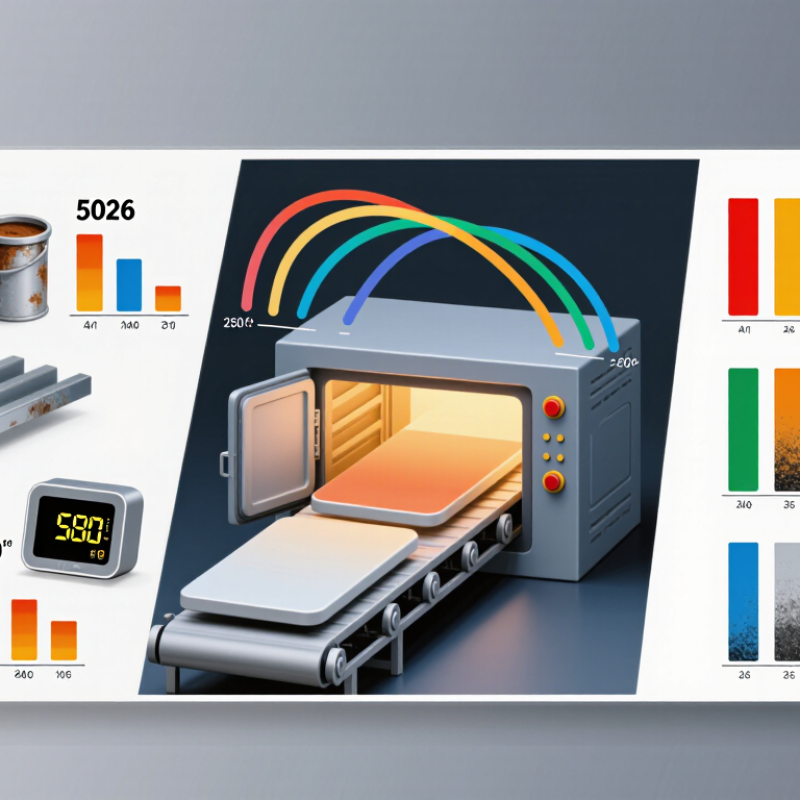
Heat resistance starts with an operating-temperature map, not a product label. Record the normal temperature, highest spike, and exposure time. A part reaching 250°C for ten minutes faces different demands from one holding 250°C continuously. Measure near the coating surface. Insulation, airflow, load, and radiant heat can change the actual temperature significantly.
Do not confuse curing temperature with service temperature. An oven cure around 180–220°C does not prove safe operation at 400°C. For 200–300°C service, verify the resin system, film thickness, adhesion, and color stability. Ask for continuous and intermittent ratings, because brief peaks may still cause blistering or gloss loss. Check the test method behind every rating.
From 350°C upward, ordinary organic powder coatings often become unsuitable. At 500–600°C, consider systems engineered for extreme heat, including inorganic or ceramic-based chemistry. The substrate matters too. Steel can scale, expand, and transfer heat into the film.
Before approval, coat a representative test panel and expose it to the planned heating and cooling cycle. Inspect adhesion, cracking, chalking, discoloration, and corrosion afterward. Repeat the test if the part cools rapidly. Thermal shock reveals weaknesses.
My early mistake was trusting a peak rating while ignoring repeated cooling. A practical safety margin is still necessary, especially around welds, edges, and direct flame-free radiant zones.
Choosing a heat-resistant powder coating in 2026 starts with the actual temperature profile, not a catalogue number. In field inspections, I often find that parts face short heat spikes and long exposure periods. These conditions affect coating life differently. Measure the metal surface, airflow, contact points, and heating cycles. A 180°C peak for ten minutes is not equal to continuous exposure at 180°C.
Epoxy offers strong adhesion, chemical resistance, and a smooth finish. Its practical continuous limit often sits near 120–150°C. Above that range, gloss loss, yellowing, and brittleness may appear. Polyester generally tolerates about 150–200°C, depending on formulation and cure quality. It suits many outdoor parts, but repeated overheating can weaken its appearance. These figures are guides, not promises. I have seen under-cured films fail earlier than expected.
Silicone-based powder coatings usually handle higher service temperatures, commonly around 200–260°C or more. They can protect ovens, exhaust components, and heat shields, but they may sacrifice hardness or abrasion resistance. A coating that survives heat may still scratch easily. Request continuous and peak temperature data, then test a coated sample through the real heating cycle. Check color change, adhesion, flexibility, and film thickness afterward. The uncomfortable detail is this: laboratory results rarely match every installation. Surface preparation and cure control still decide much of the outcome.
ASTM D2485 provides a structured way to evaluate coatings for high-temperature service. Test panels should match the intended metal preparation and film thickness. Expose them to controlled heat, then inspect adhesion, blistering, cracking, chalking, color change, and gloss loss.
Heat aging for 500–1,000 hours can reveal slow degradation. However, laboratory results do not perfectly predict every field condition. That limitation matters. Record the furnace temperature, exposure time, panel position, and inspection method. Small gaps in records can weaken an otherwise credible comparison.
Tips: Use actual production panels when possible. Test the highest expected temperature, not the average. Include thermal cycling if equipment starts and stops daily. Compare adhesion before and after aging. Photograph the same panel areas under consistent lighting. A coating may retain color while losing flexibility. Do not judge performance by appearance alone. Retest when pretreatment, thickness, or curing conditions change. Even careful testing can miss an unusual failure mode. That is why field feedback should remain part of the selection process.
Choosing heat resistant powder coating in 2026 starts with the application, not the product label. Identify the substrate, operating temperature, exposure time, and thermal cycling pattern. A part reaching 220°C briefly differs from one holding 180°C for eight hours daily. Surface preparation also matters. Remove oil, rust, and scale before coating.
Specify a dry film thickness between 60 and 120 μm. This range supports coverage without creating unnecessary internal stress. Thin areas may expose the substrate after thermal expansion. Excessive thickness can trap defects, reduce flexibility, and impair heat transfer. Measure several points, including edges, corners, and recessed surfaces. One reading is not enough. Verify curing with the coating supplier’s technical data and an independent oven study when possible.
Adhesion should reach 5B after curing and conditioning. Use a cross-hatch test where the selected standard permits it, then inspect the cuts under suitable lighting. Test both before heating and after repeated heat cycles. In practical projects, a coating can pass initial adhesion yet fail after expansion and cooling. I have seen this happen when the substrate was clean but under-cured. That mistake changed the specification. Recheck oven temperature at the part, not only the air display. Also record film thickness, cure time, and surface condition for every trial. Sometimes the first result looks convincing. It still needs questioning.
| Coating System | Typical Continuous Service Temperature | Suitable Applications | Recommended Dry Film Thickness | Target Adhesion | Main Advantages | Important Selection Considerations |
|---|---|---|---|---|---|---|
| Epoxy Powder | Approximately 120–150°C, depending on formulation and exposure duration | Indoor machinery, electrical enclosures, pipe components, and parts requiring strong chemical resistance | 60–100 μm | 5B according to ASTM D3359 cross-cut adhesion testing | Strong adhesion, high hardness, and good resistance to oils, solvents, and corrosion | Not generally preferred for prolonged exterior exposure because ultraviolet radiation can cause chalking and color change |
| Polyester Powder | Approximately 120–160°C for standard exterior-grade systems | Outdoor equipment, architectural metalwork, agricultural machinery, and general industrial components | 60–120 μm | 5B according to ASTM D3359 | Good weatherability, color retention, flexibility, and balanced cost-performance characteristics | Confirm the supplier’s specified heat limit; standard polyester is not automatically suitable for continuous high-temperature service |
| Epoxy-Polyester Hybrid | Approximately 100–140°C, depending on the resin ratio and curing schedule | Indoor cabinets, shelving, furniture components, and general-purpose fabricated metal products | 60–100 μm | 5B according to ASTM D3359 | Good appearance, smooth finish, efficient processing, and reliable indoor corrosion protection | Use caution in continuous high-heat or exterior applications; the hybrid may lose gloss or weathering performance sooner than exterior polyester |
| Silicone-Modified Powder | Approximately 200–300°C for appropriately designed high-temperature formulations | Stoves, ovens, heaters, exhaust-related parts, engine components, and heat shields | 60–120 μm | 5B after curing and conditioning, where validated by testing | Better resistance to prolonged heat exposure and thermal cycling than conventional epoxy or polyester systems | Verify pigment stability, substrate temperature, cure schedule, and adhesion after thermal cycling; high-temperature capability is formulation-specific |
| Fluoropolymer Powder | Approximately 200–260°C for selected high-performance grades | Architectural components, chemical-processing equipment, and surfaces requiring strong weather and chemical resistance | 60–120 μm | 5B according to ASTM D3359 when the substrate and pretreatment are suitable | Excellent ultraviolet resistance, weatherability, chemical resistance, and long-term color retention | Requires careful surface preparation and a validated cure process; adhesion can be sensitive to substrate condition and coating design |
| High-Temperature Specialty Powder | Approximately 250–500°C only when specifically engineered and tested for the intended service | Industrial furnaces, high-temperature ducting, burners, and selected thermal-processing equipment | 60–120 μm | 5B at ambient condition, plus retained adhesion after heat-cycle testing | Designed for demanding thermal exposure where conventional powder coatings may soften, discolor, or lose adhesion | Do not select by temperature rating alone; require documented continuous-temperature data, thermal-cycle results, coating thickness limits, and substrate compatibility |
| Any Recommended System | Must match the actual continuous temperature, peak temperature, dwell time, and number of thermal cycles | Final selection should be based on the component’s operating environment rather than resin type alone | Maintain 60–120 μm unless the technical specification states otherwise | Specify 5B: no coating removal in the ASTM D3359 cross-cut classification | Provides a measurable purchasing and quality-control requirement | Measure dry film thickness at multiple locations, document cure conditions, and test adhesion on the actual substrate after representative heat exposure |
Specification note: A 60–120 μm dry film thickness is a practical control range, but the final value should be confirmed by the coating manufacturer’s technical data sheet. ASTM D3359 rating 5B means that none of the coating is detached within the tested cross-cut area. Heat-resistance values are indicative ranges, not universal limits; validate the selected system using the actual metal substrate, pretreatment, curing process, operating temperature, exposure time, and thermal-cycle conditions.
Choosing heat resistant powder coating in 2026 requires more than checking its maximum temperature. The specification should match the substrate, exposure, film thickness, and curing process. ASTM test methods can verify adhesion, hardness, flexibility, corrosion resistance, and heat aging. However, ASTM is not one universal approval. Confirm which method applies and whether the test conditions reflect your equipment.
For outdoor steel, ISO 12944 helps define the corrosion environment, durability range, and preparation level. A coating suitable for a dry indoor cabinet may fail near salt spray, humidity, or industrial chemicals. Request documented test results, not only a temperature figure. VOC requirements also need careful review. Powder coatings usually contain very little solvent, but manufacturing, pretreatment, cleaning, and local air-quality rules can still affect compliance. Check the current regional requirements with qualified technical staff.
OEM requirements may be stricter than general standards. They can specify color stability, thermal cycling, edge coverage, grounding, thickness limits, and approved cure windows. Small details matter. Ask for batch traceability and a technical data sheet before production trials. A certificate alone can mislead. In practice, a coating may pass laboratory heat aging yet discolor on a sharp, overheated edge. That gap deserves attention. Run sample panels using the actual metal, oven profile, thickness, and service temperature. Record failures honestly. Sometimes the first selection is wrong. Rechecking the assumptions is part of reliable engineering.
Start with the substrate, operating temperature, exposure time, and thermal cycling pattern. A brief 220°C exposure differs from 180°C held for eight hours. The application decides the specification. Do not rely on a product label alone.
Specify a dry film thickness of 60–120 μm. This range supports coverage without excessive internal stress. Thin spots may expose metal after expansion. Excessive thickness can trap defects and reduce flexibility.
Measure several locations, including edges, corners, and recessed surfaces. One center reading is not enough. Uneven areas can hide weak coverage. Check the difficult places.
Remove oil, rust, scale, and other contaminants before coating. A clean surface still needs suitable preparation. Poor cleaning can weaken adhesion after heating. Surface condition matters greatly.
Require a 5B adhesion result after curing and conditioning. Use a cross-hatch test when the selected standard permits it. Inspect the cuts under suitable lighting. A passing result should survive scrutiny.
Yes, test adhesion before heating and after repeated heat cycles. Expansion and cooling can reveal failures hidden during initial testing. An under-cured part may look acceptable at first. That result needs questioning.
Compare the coating supplier’s cure data with an independent oven study when possible. Measure temperature at the part, not only on the oven display. Record cure time, film thickness, and surface condition for every trial. The air display may mislead.
Review applicable test methods for adhesion, hardness, flexibility, corrosion resistance, and heat aging. Check regional air-quality requirements, including VOC obligations. For outdoor steel, assess humidity, salt exposure, and industrial chemicals. Request traceable test records and technical data. A certificate alone may mislead.
Choosing the right Heat Resistant Powder Coating begins with mapping the operating environment. Identify the highest continuous and intermittent temperatures, especially when exposure may range from 200°C to 600°C. Then compare coating chemistries: epoxy can suit moderate heat, polyester may provide a balance of durability and temperature resistance, while silicone-based systems are generally more appropriate for higher-temperature applications. The selected formulation should match the substrate, thermal cycling, corrosion risk, and expected service life.
Performance should be verified through testing rather than temperature claims alone. Use ASTM D2485 where applicable and conduct heat-aging evaluations lasting 500–1,000 hours to assess color, adhesion, cracking, and film integrity. During application, target a consistent dry-film thickness of approximately 60–120 μm and confirm a 5B adhesion rating when required. Finally, review relevant ASTM standards, ISO 12944 corrosion-protection guidance, VOC limits, and OEM specifications to ensure the coating meets project, environmental, and quality requirements.

SSEART