Choosing the right Electrostatic Powder Coating is not simply a color decision. It is a process decision.
The coating must match the substrate, service environment, and production schedule. Steel used outdoors may need stronger corrosion protection than indoor shelving. Aluminum frames can demand different pretreatment and curing control. A glossy finish may expose every surface defect. A textured finish can hide minor marks, but it cannot repair poor preparation.
Kevin Biller, a recognized powder-coating consultant, often states, “Powder coating is a science, not an art.” That reminder matters. Cure temperature, film thickness, grounding, and gun settings can change the final result. A specification sheet may recommend 180°C for ten minutes, but that usually refers to the metal temperature, not merely the oven display.
Small details matter.
A reliable selection process begins with real operating conditions. Consider humidity, chemicals, sunlight, abrasion, impact, and cleaning methods. Ask the supplier for technical data, performance testing, and a clear cure window. Test a sample panel when appearance or durability carries serious risk. Measure the coating thickness. Inspect edges, recesses, and Faraday areas.
The process is not perfectly predictable. Part geometry, line speed, and operator technique can create uneven coverage. I would not choose a product from a color card alone. That shortcut feels efficient, yet it can become expensive later.
This guide explains how to compare resin types, finishes, protection levels, and application requirements. It also highlights common selection mistakes, because the best Electrostatic Powder Coating is the one that performs consistently after installation.
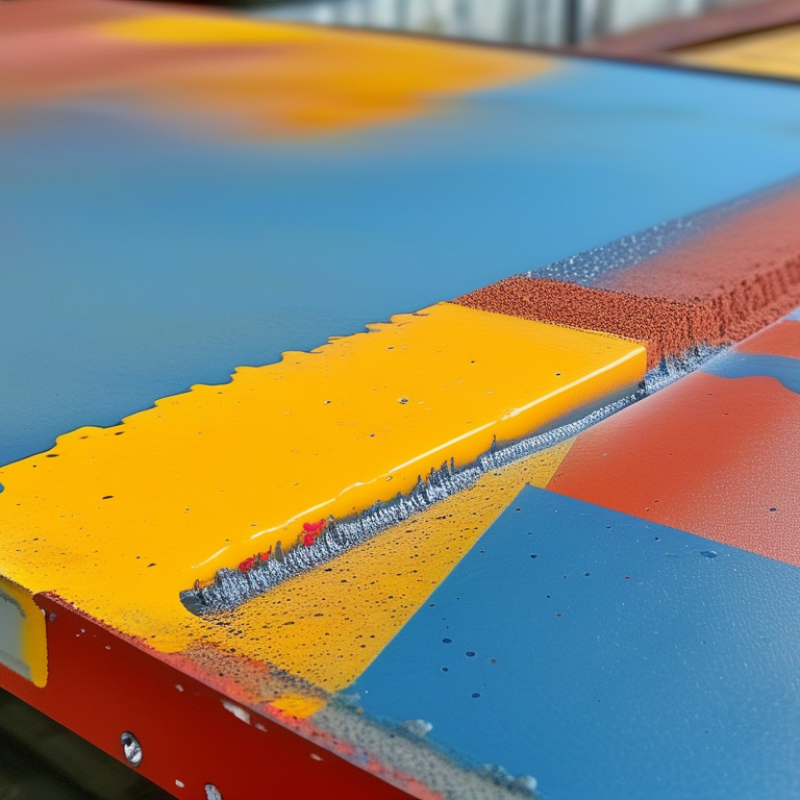
Define the substrate before selecting the powder. Steel, aluminum, and galvanized surfaces require different pretreatment strategies. Check surface cleanliness, profile, conductivity, and expected film thickness. A 2024 Grand View Research analysis valued the global powder coatings market at approximately USD 14.4 billion in 2023, reflecting broad industrial adoption. Growth does not remove the need for substrate-specific testing.
Service conditions should guide coating performance. Indoor machinery may need basic corrosion resistance, while coastal equipment faces salt, humidity, and cyclic condensation. ISO 12944 corrosion categories help classify exposure, but laboratory salt-spray hours are not a complete field prediction. A perfect test result can still mislead. Consider ultraviolet exposure, chemical contact, impact, abrasion, and operating temperature. Ask whether the part will face sharp edges, standing water, or repeated heating cycles.
Performance requirements must be measurable. Specify adhesion, hardness, flexibility, gloss retention, color stability, and corrosion resistance. For outdoor applications, accelerated weathering data deserves careful review. The U.S. Environmental Protection Agency identifies powder coating as a low-VOC finishing method, yet curing still consumes energy and requires controlled oven conditions. Confirm grounding and application efficiency before approval. In field evaluations, small defects often begin at edges, welds, and contaminated corners. Recheck those areas. Sometimes, the cheapest coating fails because the preparation was never defined.
Durability starts with the service environment, not the color chart. Epoxy powder usually delivers strong adhesion, hardness, and chemical resistance. It suits indoor frames, machinery, electrical cabinets, and workshop equipment. However, sunlight can cause chalking and color loss. It is tough indoors, but not a reliable outdoor choice.
Polyester powder performs better under ultraviolet exposure, rain, and changing temperatures. It fits outdoor furniture, architectural parts, and equipment exposed to weather. Polyester also offers useful flexibility, which can reduce cracking after minor handling damage.
Hybrid powder combines epoxy’s adhesion with polyester’s appearance and moderate weather resistance. It works well indoors, but constant sunlight can reveal its limits. I have seen attractive hybrid finishes fade sooner than expected on exposed steel.
Tips: Confirm the exposure level, chemical contact, impact risk, and required service life. Ask for test panels using the actual substrate and pretreatment. Check the cure schedule carefully. Under-curing may leave a soft surface, while excessive heat can damage the finish. Inspect edges, corners, and welds closely; these areas often fail first. A coating can look perfect after one week and still perform poorly after months. That uncertainty deserves attention. Select by evidence, not habit.
A 60–120 μm cured film offers a practical balance between coverage, edge protection, and material control. It suits many steel, aluminum, and fabricated metal surfaces. According to ISO 2808, coating thickness should be measured with calibrated instruments, not estimated by appearance. Small errors matter.
The lower range, near 60 μm, can work on smooth panels with stable grounding and controlled spraying. Rough steel or sharp corners may need 90–120 μm. Too little powder can expose peaks and edges. Too much powder may create orange peel, pinholes, or weak adhesion. It looks thick. It is not always stronger.
The U.S. Environmental Protection Agency’s AP-42 guidance reports powder-coating transfer efficiency commonly between 60% and 95%, depending on equipment and recovery practices. That range shows why application control affects both thickness and waste. A 2024 Grand View Research market report projects powder coatings to grow at about 6.6% annually through 2030, reflecting wider demand for durable, lower-emission finishes. In practice, measure several points on each part, especially corners and recessed areas. Record the readings. Then adjust gun distance, voltage, and line speed. The 60–120 μm target is useful, but it is not a universal rule. Surface profile, curing temperature, and service exposure still need careful review.
How to Choose the Right Electrostatic Powder Coating
Match Powder Cure Schedules to 160–200°C Part Temperature Requirements
Choosing powder coating starts with the part’s actual temperature, not the oven display. Most cure schedules require the metal to reach a specific temperature for a set time. A display reading of 180°C does not prove the part has reached 180°C. Thick steel warms slowly, while thin panels heat quickly. Measure both areas.
In production work, I use temperature labels or calibrated probes on heavy corners, joints, and flat surfaces. These locations often reveal uneven heating. A powder requiring 180°C for 15 minutes may need a longer oven cycle before the part reaches that temperature. Keep the part within the recommended 160–200°C range. Too little heat can leave the film soft, porous, or poorly bonded. Excessive heat may reduce gloss or damage sensitive substrates.
Test real parts before approving a schedule. Record oven temperature, part temperature, heating time, and dwell time. Then check hardness, adhesion, appearance, and edge coverage. I once trusted the oven setting and overlooked a thick mounting plate. The coating looked acceptable, but adhesion failed near the joint. That mistake changed our process.
Not every result is predictable.
Part loading also matters. A crowded rack blocks airflow and extends heating time. Recheck the schedule when thickness, color, metal type, or batch size changes. Cure data should come from the powder’s technical documentation and be confirmed through controlled trials.
Choosing the right electrostatic powder coating requires more than comparing color charts. Transfer efficiency deserves careful attention. Industry guidance commonly reports powder transfer efficiency of up to 95%, but booth design, grounding, gun settings, and operator technique can reduce real-world recovery. Ask suppliers for measured first-pass efficiency, not only theoretical claims. A clean film on a grounded test panel is useful evidence.
VOC content is another practical checkpoint. U.S. EPA surface-coating guidance identifies powder coating as a low-VOC process because the coating contains little or no solvent. However, curing can still release small quantities of decomposition products. Request a current safety data sheet and laboratory VOC test method. “Nearly zero” needs context.
Standards make quality claims easier to verify. ISO 8130 methods can assess particle size, flow behavior, and gel time. ASTM D3359 evaluates adhesion, while ASTM D4060 measures abrasion resistance. For corrosion performance, humidity and salt-spray results should state film thickness, pretreatment, exposure time, and failure rating. A 500-hour test sounds impressive, yet it does not predict every outdoor environment.
Use panels that match the final metal substrate. Inspect edge coverage, orange peel, pinholes, and gloss after curing. I have found that cure temperature alone can mislead; metal temperature and dwell time matter more. Results may look acceptable while adhesion remains weak. That is an uncomfortable detail, but it deserves verification.
Verify transfer efficiency, VOC content, applicable standards, and quality-test results before selecting a coating system.
The chart shows representative powder-utilization benchmarks for common electrostatic application setups. Efficient systems can achieve approximately 80–95% material utilization when gun settings, grounding, booth airflow, part geometry, and reclaim controls are properly optimized. Powder coatings are normally formulated without solvent, so nominal solvent VOC content is typically near zero; verify the product SDS for any additives or curing emissions. For quality assurance, request documented dry-film thickness, adhesion results such as ASTM D3359 or ISO 2409 ratings, appearance inspection, and corrosion or durability test results relevant to the application.
A cured film between 60 and 120 μm often balances coverage, edge protection, and material use. Measure it. This range is not universal.
Use the lower range on smooth panels with stable grounding and controlled spraying. Sharp edges may still need more coverage. Small thickness errors matter.
Rough steel, textured surfaces, and sharp corners may require 90–120 μm. Thin areas can expose peaks and edges. Corners need attention.
Not always. Excess powder may cause orange peel, pinholes, or weak adhesion. It can look stronger. That impression may be wrong.
Use calibrated instruments rather than judging the surface by appearance. Measure several points on each part. Include corners and recessed areas. Record every reading.
Booth design, grounding, gun settings, recovery methods, and operator technique all affect results. Theoretical efficiency may not match production efficiency. Ask for measured first-pass data.
Powder coating usually contains little or no solvent, so VOC content is generally low. Curing may still release small decomposition products. “Nearly zero” needs context. Request current safety and laboratory test information.
Review particle behavior, flow, gel time, adhesion, abrasion resistance, and corrosion-test results. Test panels should match the final metal substrate. A long salt-spray result does not predict every outdoor environment.
Check metal temperature and dwell time, not only oven air temperature. Inspect edge coverage, orange peel, pinholes, and gloss after curing. Appearance can mislead. Weak adhesion may remain hidden.
Choosing the right Electrostatic Powder Coating begins with understanding the substrate, operating environment, and required performance. Consider whether the part will face moisture, chemicals, UV exposure, abrasion, heat, or frequent handling. Epoxy powders generally provide strong adhesion and chemical resistance for indoor applications, polyester powders offer better weather and UV durability, and hybrid powders can balance appearance, protection, and cost for moderate service conditions.
Consistent results also depend on correct application and curing. A film thickness of approximately 60–120 μm can provide reliable coverage and protection when applied evenly. The selected powder must be compatible with the part’s ability to reach a metal temperature of about 160–200°C for the required cure time. Before production, verify transfer efficiency, VOC content, applicable standards, and quality-test results such as adhesion, impact, corrosion, and thickness performance. These checks help ensure the coating delivers dependable protection and a durable finish.

SSEART