Insulation Powder Coating is changing how manufacturers protect conductive parts from heat, moisture, and unwanted electrical contact. It applies a dry, electrically resistant powder to metal surfaces. Electrostatic charging makes the particles cling to grounded components. Heat then melts and crosslinks the layer inside an oven. The result is a continuous film around edges, corners, and exposed threads.
The Powder Coating Institute explains that powder coating contains no solvent carrier and forms a film through heat curing. That distinction matters. Grand View Research valued the global powder coatings market at approximately USD 14.6 billion in 2023. It also projects continued growth through 2030, supported by durable finishes and lower volatile organic compound emissions. These figures describe powder coatings broadly, not insulation grades alone. That limitation deserves attention.
Nicholas Liberto, a recognized powder-coating consultant and author, states, “Powder coating is a process, not simply a paint.” His point is practical. Insulation performance depends on resin chemistry, film thickness, cure temperature, surface preparation, and voltage testing. A thin patch near a sharp edge can weaken protection. Trapped moisture can create another failure path.
This guide examines what Insulation Powder Coating is, how it works, and where it performs best. It also considers epoxy, polyester, and hybrid systems. Laboratory results can look excellent. Factory conditions are less forgiving. That gap requires honest testing, documented parameters, and periodic inspection.
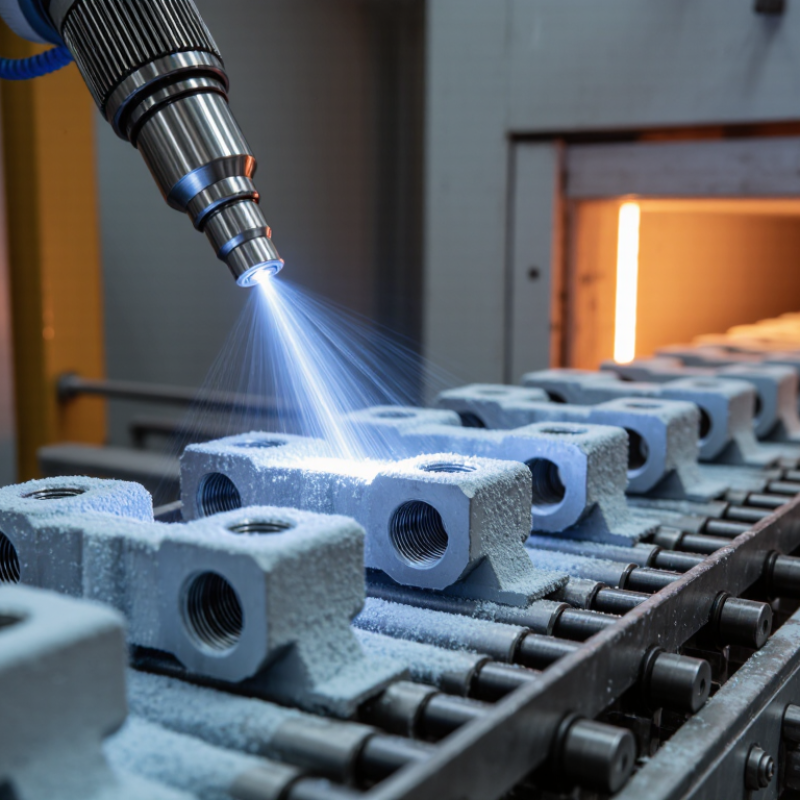
Insulation powder coating is a dry, polymer-based coating designed to reduce electrical conduction across a metal surface. It usually contains resin, curing agents, pigments, and insulating fillers. Unlike liquid paint, it contains little or no solvent. The powder remains dry until heat melts and bonds it into a continuous film.
The process is practical but precise. Technicians clean the metal to remove oil, rust, and moisture. They then spray charged powder onto the grounded part. Electrostatic attraction helps the particles cover edges and recessed areas. In an oven, controlled heat melts the powder and starts cross-linking. After cooling, the coating forms a dense barrier with high electrical resistance. Its thickness, adhesion, and dielectric strength depend on the formulation and curing schedule.
This coating can protect busbars, motor components, electrical housings, and other conductive parts. It also adds resistance against abrasion, humidity, and surface contamination. However, insulation powder coating is not a universal substitute for approved electrical insulation systems. Sharp edges, pinholes, poor grounding, or uneven thickness can create weak points. That assumption needs checking. Experienced applicators test coating thickness and electrical performance on representative parts. They also inspect corners and contact areas closely. In real production, small surface defects can matter more than a smooth appearance. Performance may decline after overheating, impact, or prolonged environmental exposure. The correct coating should match the voltage, temperature, substrate, and service conditions.
| Data Dimension | Typical Information | How It Works or Why It Matters |
|---|---|---|
| Definition | A dry, electrically insulating coating powder that is applied to a conductive part and cured into a continuous solid film. | The cured film separates the conductor from surrounding components, reducing the likelihood of short circuits, leakage current, and accidental contact. |
| Common Resin Systems | Epoxy, epoxy-polyester hybrid, polyester, and other thermosetting resin systems. | The resin provides film formation, adhesion, chemical resistance, and thermal stability. Epoxy systems are commonly selected when strong electrical insulation and adhesion are priorities. |
| Physical Form Before Application | Finely divided solid particles containing resin, curing agent, pigments, fillers, and functional additives. | Because the material contains no liquid solvent, it is stored and applied as a dry powder rather than as a solvent-based liquid coating. |
| Application Method | Electrostatic spray application is the most common method. The powder may also be applied by fluidized-bed or other specialized processes. | In electrostatic spraying, the powder particles are electrically charged and attracted to the grounded workpiece, helping create an even coating layer. |
| Required Substrate | Metal parts such as busbars, electrical enclosures, motor components, transformer components, and conductive hardware. | The substrate must normally be electrically conductive and properly grounded during electrostatic application so that charged powder can be attracted to its surface. |
| Pre-Treatment | Cleaning, degreasing, removal of rust or scale, and, where appropriate, chemical or mechanical surface preparation. | Surface preparation removes contaminants and improves adhesion. Poor preparation can cause blistering, peeling, pinholes, or reduced dielectric performance. |
| Film Formation | The deposited powder melts and flows during heating, then chemically cross-links into a thermoset coating. | Cross-linking converts loose powder into a permanent, continuous film that cannot be remelted and reshaped like a thermoplastic material. |
| Typical Cure Conditions | Many systems require a metal-part temperature of approximately 160–200°C for about 10–30 minutes, depending on the formulation and film thickness. | The specified cure schedule is based on the actual part temperature, not only the oven air temperature. Under-curing may reduce adhesion, hardness, and electrical performance. |
| Typical Dry Film Thickness | Often approximately 60–150 micrometres for general powder coating applications; electrical insulation designs may require a different thickness. | Greater thickness can increase insulation distance and dielectric withstand, but excessive thickness may cause uneven coverage, cracking, dimensional problems, or incomplete curing. |
| Electrical Insulation Function | The coating acts as a dielectric barrier with high electrical resistance and low current flow under specified conditions. | It helps prevent current from traveling between a conductor and nearby conductive surfaces. Performance depends on thickness, uniformity, moisture, temperature, defects, and the coating formulation. |
| Dielectric Strength | Typical thermoset powder coatings may provide dielectric strength in the approximate range of 10–30 kV/mm, although actual values vary significantly. | Dielectric strength indicates the electric field level at which breakdown may occur. A published value should always be linked to a test method, specimen thickness, conditioning, and formulation. |
| Volume Resistivity | Insulating powder coatings commonly exhibit very high volume resistivity, often reported in the range of 1012–1016 ohm-centimetres, depending on the material and test conditions. | High volume resistivity indicates that the cured coating strongly limits current passing through its body. Humidity and temperature can reduce measured resistance. |
| Thermal Performance | Continuous-use temperature is formulation-specific; many general thermoset systems are used in applications around 100–150°C, while specialized systems may tolerate higher temperatures. | Temperature affects electrical resistance, dielectric strength, adhesion, and aging rate. The coating’s rating should be matched to the maximum operating and fault temperatures. |
| Mechanical Protection | Provides a hard, bonded layer with resistance to abrasion, impact, and handling damage, subject to the resin system and cure quality. | Mechanical protection helps preserve the insulating barrier. A deep scratch, crack, chip, or pinhole can create a localized electrical weakness. |
| Moisture and Chemical Resistance | Resistance varies by resin type, cure, thickness, and chemical exposure. Epoxy-based systems generally provide strong adhesion and chemical resistance but may have limited outdoor UV durability. | Water absorption and contamination can reduce surface insulation resistance and increase leakage current. The coating should be selected for the actual environment. |
| Environmental Benefit | Powder coating is a low-volatile-organic-compound process because the coating is applied as a dry solid and does not normally require liquid solvents. | Overspray can often be collected and reused in controlled processes, although collection, contamination, color changes, and waste management must still be considered. |
| Common Defects | Pinholes, craters, orange peel, thin spots, poor edge coverage, voids, contamination, blistering, and under-cured areas. | Defects can reduce dielectric reliability. Prevention requires controlled grounding, clean equipment, suitable powder storage, correct film thickness, and a validated cure schedule. |
| Quality Checks | Visual inspection, dry-film thickness measurement, adhesion testing, hardness testing, cure verification, insulation-resistance testing, and dielectric withstand testing. | Electrical tests should be performed using the applicable product, industry, or project specification. Test voltage and duration must be selected for the part design and insulation system. |
| Design Considerations | Allow for coating thickness on dimensions, threaded areas, contact points, sharp edges, corners, masking zones, and required creepage and clearance distances. | Powder coating is not a substitute for correct electrical spacing, grounding, mechanical design, or other required insulation barriers. |
| Key Advantages | Uniform protective film, strong adhesion, high electrical resistance, good mechanical durability, efficient material use, and reduced solvent emissions. | These benefits make insulation powder coating suitable for many conductive components where both electrical separation and physical protection are required. |
| Important Limitation | Not every powder coating is electrically insulating, and a general-purpose coating should not be assumed to meet a specific voltage or temperature rating. | The final coating system must be qualified on the actual substrate and geometry under the intended environmental, thermal, mechanical, and electrical conditions. |
| Reference note: The numerical ranges in this table are typical engineering ranges rather than guaranteed specifications. Actual performance depends on the powder formulation, substrate, surface preparation, film thickness, cure schedule, test method, temperature, humidity, and service voltage. | ||
It is a dry polymer coating that reduces electrical conduction across metal surfaces. Heat melts it into a continuous insulating film.
Technicians clean the metal, ground the part, and spray electrically charged powder. Controlled oven heat then melts and cures it.
Common applications include busbars, motor components, transformer parts, heating elements, battery housings, and control cabinets.
It can reduce accidental contact, corrosion, surface tracking, abrasion, and humidity damage. It may also produce little solvent emission.
No. Pinholes, sharp edges, weak adhesion, or uneven thickness can create electrical weak points. Appearance can mislead.
Performance depends on thickness, formulation, curing temperature, surface cleanliness, humidity, voltage, and operating temperature.
Not automatically. Required clearances and other insulation measures may still be necessary. That assumption needs checking.
Measure thickness and test electrical resistance on representative parts. Inspect corners, recesses, contact areas, and possible pinholes closely.
Overheating, impact, moisture, contamination, and long environmental exposure can reduce performance. Small defects matter.
Repairs may be less convenient than liquid coatings. The damaged area should be cleaned, evaluated, and tested again.
Insulation Powder Coating is a dry, protective coating designed to reduce electrical conductivity and improve the durability of metal components. It is typically made from insulating polymer resins, curing agents, pigments, mineral fillers, and performance additives. These ingredients are blended into a fine powder and selected to provide strong adhesion, heat resistance, moisture protection, and stable electrical performance.
During application, the powder is electrostatically sprayed onto a clean, prepared surface, allowing the particles to attach evenly. The coated component is then heated so the powder melts, flows, and cures into a continuous insulating film. This layer separates conductive surfaces, helping prevent unwanted current flow, short circuits, corrosion, and surface damage. Insulation Powder Coating is commonly used on electrical enclosures, busbars, motor parts, connectors, and other metal components. Its main advantages include uniform coverage, mechanical strength, chemical resistance, and low material waste. However, proper surface preparation, thickness control, curing conditions, and compatibility testing are essential for reliable results.

 SSEART