China’s powder coating industry combines large-scale production with increasingly specialized finishing technology. This guide examines ten manufacturers associated with Durable Powder Coating for architecture, appliances, automotive parts, agricultural equipment, and industrial machinery.
The ranking considers more than glossy websites or impressive factory photographs. It reviews resin systems, pigment stability, pretreatment guidance, curing control, coating thickness, adhesion, impact resistance, and corrosion performance. Quality records, laboratory capabilities, export experience, and technical support also matter. A coating that survives a showroom inspection may fail after repeated sunlight, moisture, abrasion, or chemical exposure.
Kevin Biller, a veteran powder-coating consultant, has explained, “Powder coating is a finishing process, not merely a type of paint.” That distinction is important. Durable Powder Coating depends on surface preparation, electrostatic application, oven temperature, film thickness, and substrate design. One weak stage can compromise the entire finish.
Real factories reveal details that brochures often omit. Look for calibrated ovens, clean spray booths, controlled storage, and traceable batch records. Ask how suppliers handle color variation between production runs. Ask for test data, not promises.
No list is perfect.
Some manufacturers excel at custom colors but lack global support. Others offer strong testing but limited flexibility for small orders. This overview recognizes those trade-offs instead of presenting a flawless picture. Buyers should still verify current certifications, samples, production capacity, and regional compliance before signing a contract. A careful comparison can reduce rework, premature corrosion, and costly replacement.
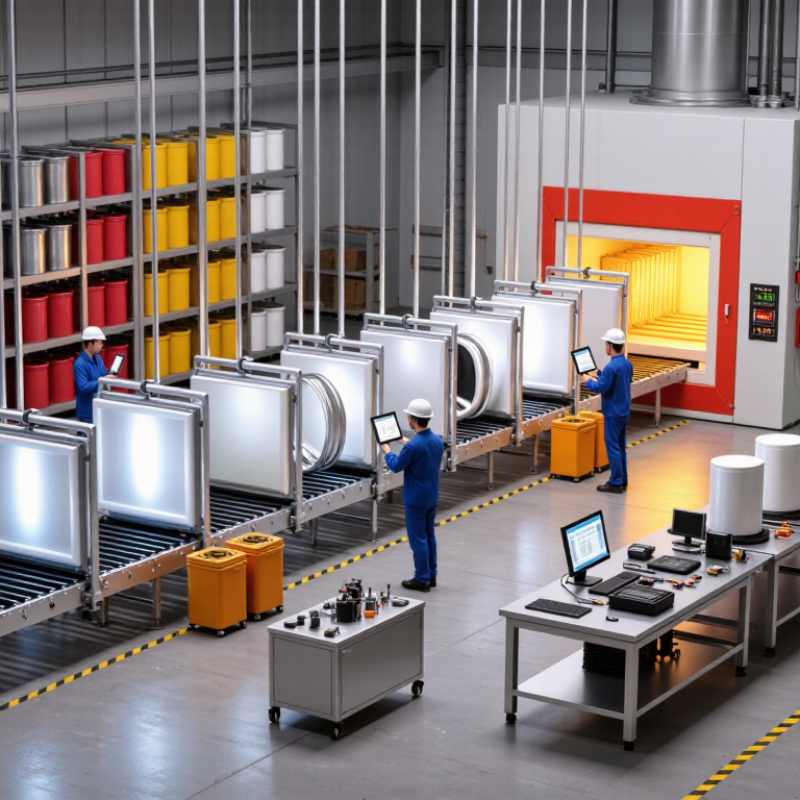
Durability begins long before powder reaches a spray gun. For a China-based manufacturer, it means controlling resin chemistry, pretreatment, curing, and traceability as one system. Not merely producing a glossy panel. Grand View Research valued the global powder coatings market at about US$15.3 billion in 2022 and forecast continued growth through 2030. This expansion increases pressure on factories to maintain quality at scale.
A durable manufacturer should provide batch records, coating thickness data, cure charts, and test results. Auditable evidence matters. Technical credibility also depends on testing that matches the end use. Salt spray alone is not enough. ISO 12944 exposure categories, ASTM D3359 adhesion testing, and accelerated weathering reveal different failure risks. Exterior architectural projects may also require performance aligned with AAMA 2604 or AAMA 2605 requirements.
The Powder Coating Institute identifies architectural, automotive, and general industrial applications as major demand areas. Each application needs different formulation and process controls. In China, humidity, coastal salt, and long logistics routes can alter coating performance. Still, no laboratory claim guarantees every project. That is the uncomfortable part. Manufacturers willing to review failures, adjust pretreatment settings, and disclose limitations deserve more trust than suppliers promising permanent protection.
| No. | Evaluation Dimension | Relevant Standard or Test Method | Verifiable Performance Indicator | Why It Matters for Durability | Evidence to Request from a Manufacturer |
|---|---|---|---|---|---|
| 1 | Corrosion-resistance testing | ISO 9227 or ASTM B117 | Salt-spray exposure reported in hours, with evaluation of blistering, rusting, and creepage | Shows how the coating system performs in accelerated corrosive conditions; results depend on substrate and pretreatment. | Complete test report, coating thickness, substrate type, pretreatment process, scribe method, and acceptance criteria |
| 2 | Outdoor weathering performance | ISO 4892-3, ASTM G154, or approved natural-weathering protocols | Color change, gloss change, chalking, cracking, and blistering after defined UV and moisture exposure | UV radiation, heat, and moisture are major causes of fading and surface degradation outdoors. | Exposure cycle, irradiance, temperature, duration, color-difference method, and gloss-retention results |
| 3 | Adhesion to the substrate | ISO 2409 or ASTM D3359 | Cross-cut classification or adhesion rating after curing and, where relevant, after environmental exposure | Strong adhesion helps prevent peeling, delamination, and corrosion spreading beneath the film. | Adhesion results before and after humidity, salt-spray, or immersion testing |
| 4 | Impact resistance | ASTM D2794 or ISO 6272 | Impact energy at which cracking, flaking, or loss of adhesion is observed | Resilient films are less likely to fail during transport, installation, handling, or service impact. | Test direction, panel thickness, coating thickness, impact energy, and failure description |
| 5 | Flexibility and bend resistance | ISO 1519 or ASTM D522 | Mandrel-bend or conical-mandrel result without visible cracking or detachment | Flexibility is important for formed parts, edges, and components exposed to vibration or thermal movement. | Mandrel diameter, panel preparation, coating thickness, and visual assessment criteria |
| 6 | Surface hardness and scratch resistance | ASTM D3363 or ISO 15184 | Pencil-hardness classification and documented scratch or mar resistance | Helps the finished surface resist visible damage from cleaning, assembly, and normal contact. | Hardness grade, conditioning temperature, film thickness, and test-panel details |
| 7 | Chemical and cleaning resistance | ISO 2812 series or project-specific chemical-resistance procedures | Resistance to defined cleaners, oils, fuels, solvents, acids, or alkaline agents for a specified contact time | Industrial and architectural surfaces may be exposed to detergents, chemicals, and maintenance agents. | Chemical concentration, temperature, exposure duration, cleaning method, and visual rating |
| 8 | Humidity and water resistance | ISO 6270-1, ISO 6270-2, or ASTM D2247 | Blistering, rusting, adhesion loss, or other coating defects after controlled humidity exposure | Moisture can penetrate defects and interfaces, accelerating corrosion and delamination. | Humidity conditions, exposure duration, specimen preparation, and post-test inspection records |
| 9 | Film thickness and curing control | ISO 2360, ISO 2808, and the powder-coating technical data sheet | Uniform dry-film thickness and documented metal-temperature curing window | Incorrect thickness or incomplete curing can reduce adhesion, flexibility, chemical resistance, and weathering life. | Thickness mapping, oven profile, metal-temperature records, batch traceability, and inspection plan |
| 10 | Quality management and application support | ISO 9001 certification, documented production controls, and applicable product certifications | Lot traceability, standardized raw-material controls, technical data sheets, application guidance, and corrective-action records | Consistent manufacturing and correct application are essential for repeatable long-term coating performance. | Certificate scope, batch certificate, quality-control records, technical support process, and complaint-response procedure |
Note: The standards and indicators above are commonly used for evaluating durable powder-coating systems. Acceptance limits vary according to resin chemistry, substrate, pretreatment, coating thickness, exposure category, and the project specification; no single test result independently proves service life.
It controls resin chemistry, pretreatment, curing, and traceability together. A glossy sample alone proves very little.
Request batch records, coating thickness data, cure charts, and recent test reports. Missing records deserve careful questions.
No. Salt spray shows corrosion resistance, but adhesion and weathering tests reveal different risks.
Check adhesion, impact resistance, gloss retention, corrosion protection, and accelerated UV exposure. Testing matters most.
Super-durable polyester grades often suit outdoor use better than standard grades. Performance still depends on pretreatment, thickness, and curing.
Look for automated spraying, accurate oven controls, low-bake options, and laboratory color-matching equipment.
No. A large factory may still have uneven batches or high rejection rates. Capacity can hide weakness.
Review recent samples, independent test certificates, site-audit findings, and replacement response. Do not trust brochures alone.
Humidity, coastal salt, temperature changes, and long transport routes can alter performance. Laboratory results cannot predict every project.
Ask the manufacturer to review pretreatment, curing, thickness, and test data. Honest suppliers admit limits, though solutions may remain imperfect.
This article explores what makes a Chinese manufacturer a reliable provider of Durable Powder Coating. It explains the key factors used to identify the top ten manufacturers, including coating performance, resistance to corrosion and impact, color consistency, formulation expertise, quality control, production capacity, and commitment to technical development. The discussion also considers how manufacturers support different industrial applications while maintaining stable product quality and dependable delivery.
A practical comparison of product quality, technology, and manufacturing capability helps readers understand the strengths of leading suppliers without relying only on price. The article also provides guidance for selecting the right Chinese powder coating partner by examining certifications, testing procedures, customization services, communication, production flexibility, packaging, and after-sales support. By evaluating these areas together, buyers can make a more informed decision and choose a supplier capable of providing consistent Durable Powder Coating solutions for long-term industrial use.

 SSEART