Silver Powder Coat can give metal products a bright, refined finish, but appearance is only part of the buying decision. For companies comparing manufacturers in China, consistent color, smooth coverage, and dependable batch quality matter just as much. A sample panel under neutral light can reveal differences that a product photo may hide. It is a small test, but a useful one.
This guide introduces factors to consider when evaluating China-based Silver Powder Coat manufacturers for sale. Look beyond catalog descriptions. Ask for technical data sheets, coating recommendations, available particle sizes, packaging details, and information about production quality checks. Confirm whether the supplier can provide samples and explain how it handles color matching across repeat orders. These questions help buyers judge product fit without relying on broad claims.
Details matter. A supplier’s response to a specific question can be as informative as its brochure. Still, polished communication does not guarantee stable production; that deserves verification. Request relevant certifications where applicable, review recent documentation, and discuss expected order volumes and lead times before making a commitment. If possible, compare sample performance using the application process your team actually plans to use. No single checklist removes every sourcing risk, and requirements vary by product and market. Careful comparison, clear specifications, and direct technical discussion can make the search more reliable.
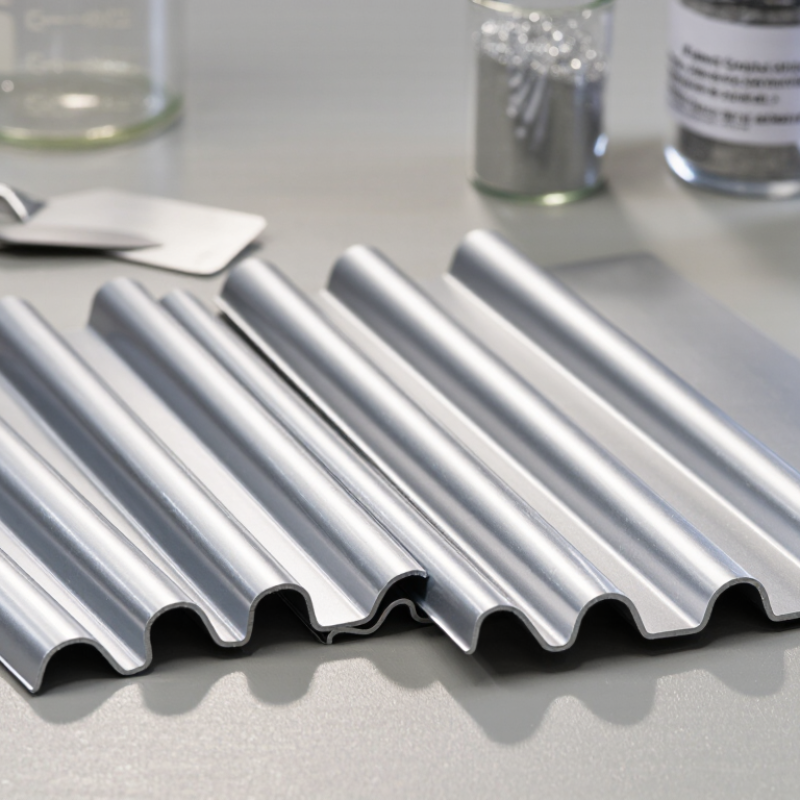
Silver powder coating is a dry finish applied to metal, often used on furniture, machinery, and architectural parts. Its silver appearance usually comes from metallic-effect pigments, such as aluminum flakes or mica, not solid silver. That distinction affects both cost and the final look.
During application, a spray gun gives powder particles an electrostatic charge. The grounded metal part attracts them, forming a layer across its surface. The coated part then enters a curing oven, where heat melts the powder and lets its resin form a continuous film. Curing temperature and time depend on the coating formulation and the part’s thickness. Too little heat can leave the finish weak; too much may change its color.
Preparation matters. Oil, rust, or uneven pretreatment can lead to poor adhesion or visible defects. Metallic flakes can also settle at different angles, so spray distance and overlap influence the shade. Not a mirror. Silver finishes may look darker or grainier under workshop lights than on a screen. A test panel under the intended lighting can reveal this before production. Ask suppliers for technical data on curing conditions, recommended film thickness, and suitable substrates, then check the finish on the actual part.
They usually combine resin, curing agents, silver-effect pigments, and flow additives. Exact proportions depend on the finish and curing conditions.
Dry ingredients are premixed and heated in an extruder until they form a uniform melt. The cooled material is chipped, ground, and screened. Small details matter.
Metallic flakes reflect light differently as viewing angles or film thickness change. Pinholes, rough edges, and uneven sparkle may appear on a test panel.
View it in daylight and indoor lighting. Look for consistent color, smooth edges, and even sparkle. A catalog image is not enough.
Request a current technical data sheet, batch identification, and inspection records. Ask for test results on adhesion, impact resistance, and corrosion performance.
One attractive panel cannot show whether routine production stays consistent. Compare panels from more than one batch when possible.
Use sealed, moisture-resistant bags and keep the powder dry. Follow the supplier’s handling and curing instructions.
Confirm quantities, lead times, color matching, and defect handling. Set measurable acceptance criteria and approve a small trial run first.
No. Results also depend on the metal surface and curing profile. A panel can still mislead, so test on the actual substrate.
Silver Powder Coat is a protective and decorative finish made by applying fine coating powder to a prepared surface and curing it with heat. The process creates a durable layer with a metallic silver appearance, offering an alternative to liquid coatings. Its finish, texture, and performance can vary depending on the powder formulation, surface preparation, application method, and curing conditions.
Silver powder coatings are commonly used on metal components, equipment, furniture, and architectural parts where appearance and surface protection matter. Manufacturing typically involves blending coating ingredients, processing the mixture into a uniform material, cooling and grinding it into powder, and checking the result for consistency. When evaluating manufacturers in China, buyers can consider production capabilities, quality-control procedures, technical support, and communication. Comparing suppliers also means reviewing product specifications, finish samples, minimum order requirements, delivery arrangements, and total pricing to find an option that suits the intended application.

 SSEART